Geosciences Popularization (Structure of the Earth)
编辑: 小编 时间:2023-07-03 18:51:28 浏览次数:
Inner Structure of the Earth
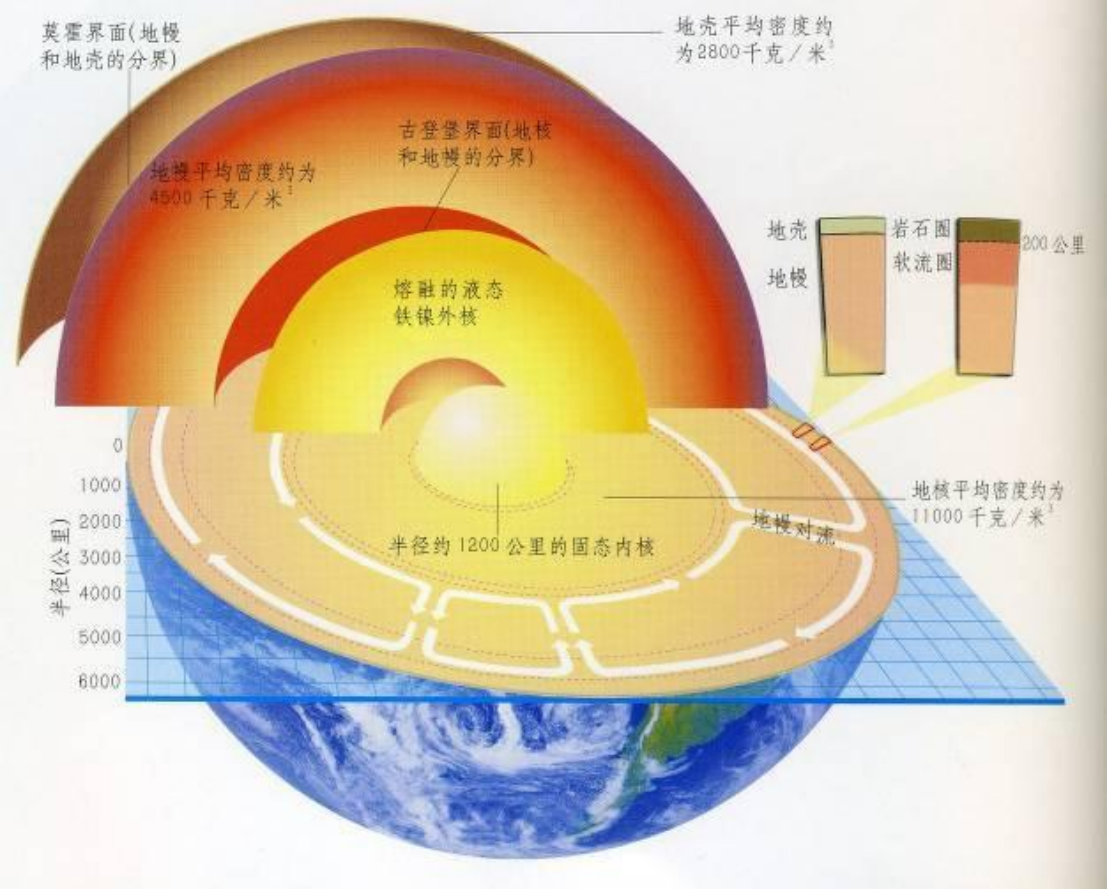
Through seismologic technology, scientists have found out that the Earth consists of several concentric and spherical layers. Based on its chemical and physical features, the Earth is further dividedinnerwards into three parts, crust, mantle and core. The crust has an uneven thickness, thinner in ocean part and thicker in land area, with a mean about 33 kilometers. The crust is mainly composed of silicate rocks. The layer below the crust is the mantle, which is about 2,800 kilometers thick. The mantle is further divided into the upper and lower mantles. The former is about 1,000 km thick and mainly made up of eclogite, while the latter is some 1,800 kilometers thick and is guessed to be composed mostly of oxides of iron, magnesium and other metals. In the mantle, about 60 - 400 kilometers below the Earth’s surface, there exists a plastic layer called asthenosphere. The convection of theasthenosphere can cause the crustal movement. The solid part above the asthenosphere, including the upper mantle and the crust, is called lithosphere. Below the mantle, the inner part of the Earth is the core. The radius of the core is 3,468 kilometers. The core can also be divided into two parts, outer and inner cores. The out core is about 3,100 km thick. Inferably, the out core could be in fusing-liquid status while inner core in solid status.
Surface of the Earth
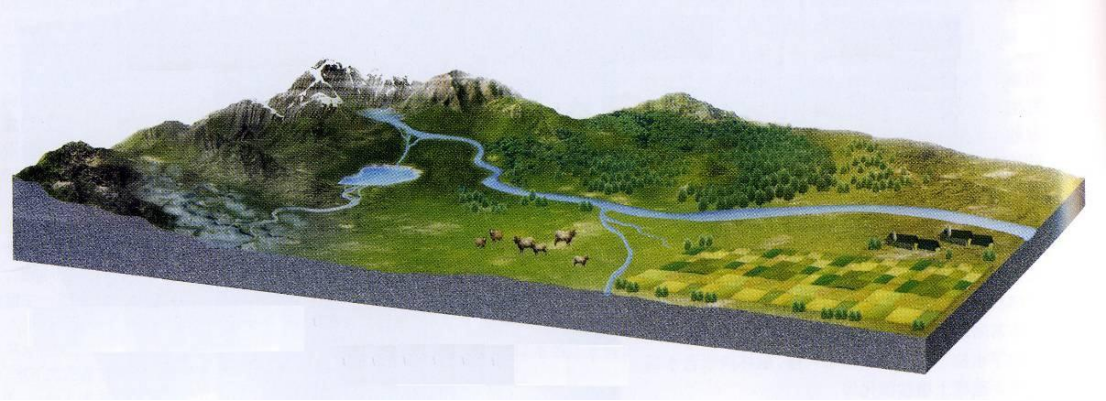
The outermost layer of the Earth is the crust, which is the place we are living on. The crust is composed of rock and soil coverage. Most of the crust’s surfaces are covered by oceans, whereas lakes and rivers are usually distributed in the depression parts of the lands. In cold area, water accumulates and appears in the form of glacier. Besides, in a certain depth beneath the land surface, there also exists water, which is called underground water. All these various forms of water consist of the hydrosphere. Above the lithosphere and hydrosphere, the whole Earth is surrounded by the atmosphere. The lithosphere, hydrosphere and atmosphere are separated but interacted with each other. Consequently, there are areas on the Earth, which have mineral materials, air and water. Plus suitable temperature conditions, the areas have become the places for organisms to live and thus is called biosphere. Human beings are the most active component of the biosphere.