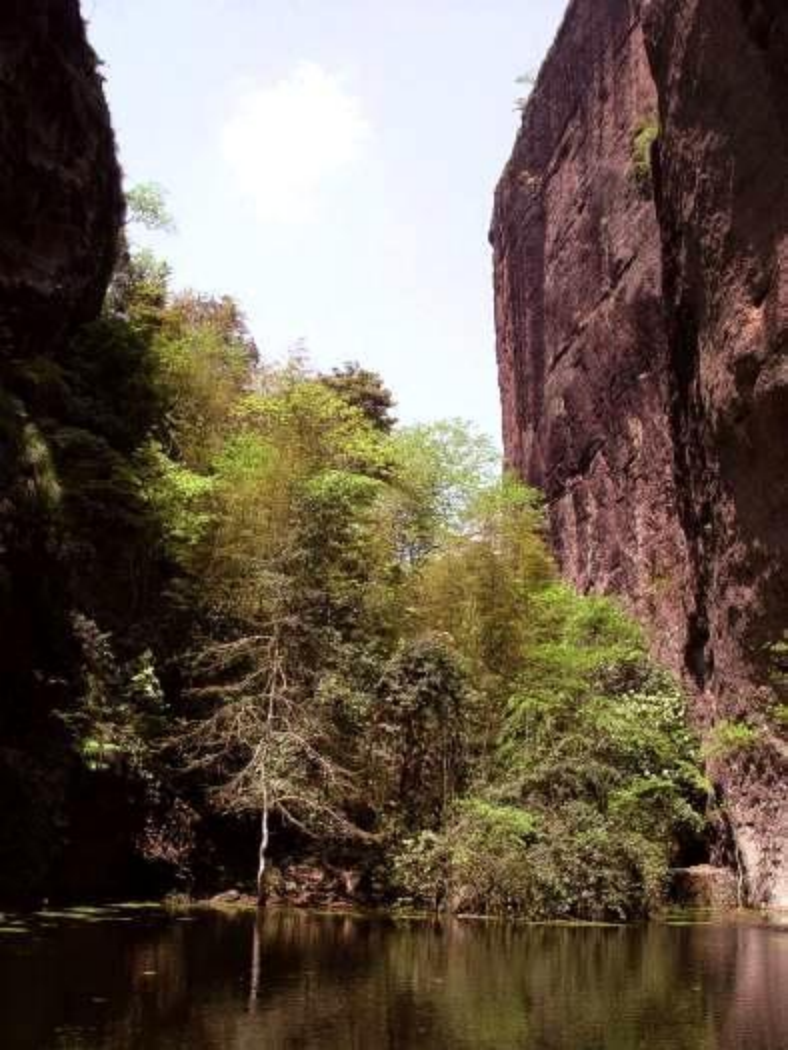
Geosciences Popularization (Geological Process)
编辑: 小编 时间:2026-05-12 10:38:49 浏览次数:
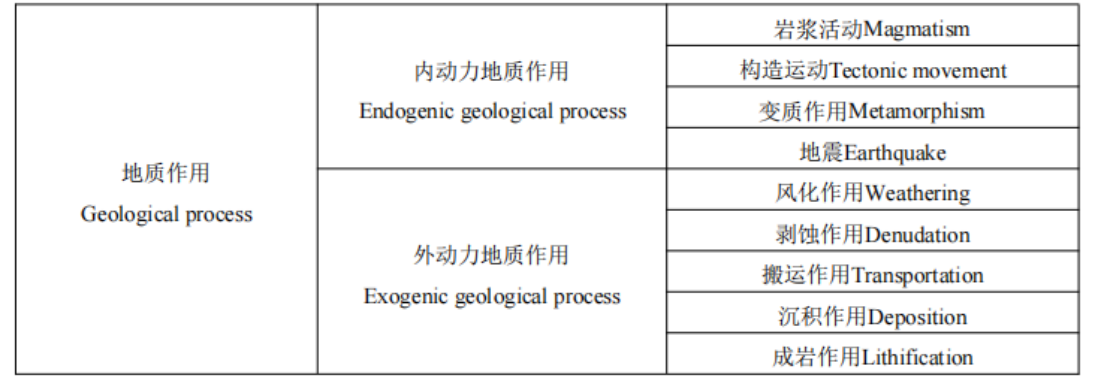
Geological Process: Force of Modifying the Earth’s Surface It is geological process that results in continuous changes and developments of the components, structures and surface of the Earth’s crust. The energies from inner Earth have made the Earth’s crust in active. The energies come from many sources like those produced by the splitting of the radioelements inside the Earth or those produced by speed variations of the Earth’s self-rotation. The movement of the Earth’s crust is global and pays a dominant role in modifying the form of the Earth’s surface. Such a geological process resulting from the endogenic forces of the Earth is called the endogenic geologic process, which has not only made the inner Earth’s structures more complicated but also enhanced the relief differences of the Earth’s surface. Under a long-term stress of the Earth’s crust, the hard rocks can be twisted and broken up. Strong press can cause the uplift of the rocks and thus the formation of mountains. The pull force, on the other hand, can result in the depression of land and thus the formation of the lowlands, lakes and oceans.
The appearances of mountains and waters we see today have already undergone modification by the sun, air, water, organism and other natural forces. These forces have worn away the projected portions of the Earth’s surfaces and moved the so-produced debris to deposit in the depressed low areas. This exogenetic force-induced process, which is unrelated to the Earth, is referred to as the exogenic geologic process, which, in contrast with endogenic geologic process, reduced the relief differences of the Earth’s surfaces.Geological processes can not only modify the form of the Earth’s surface but also cause the continuous changes in components and structure of the Earth’s crust.
1. Classification Schema of Geological Process
2. Weathering
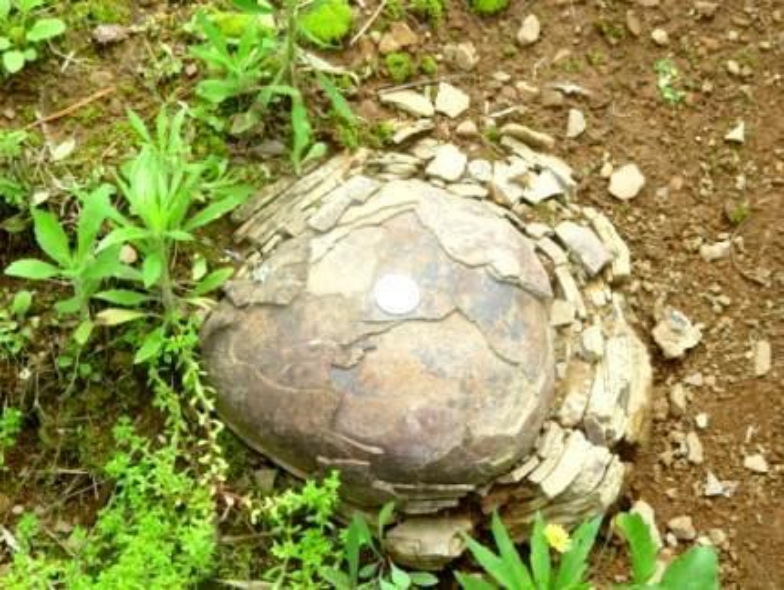
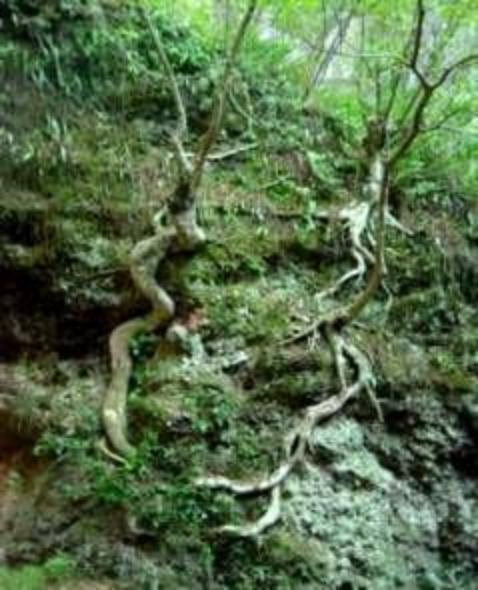
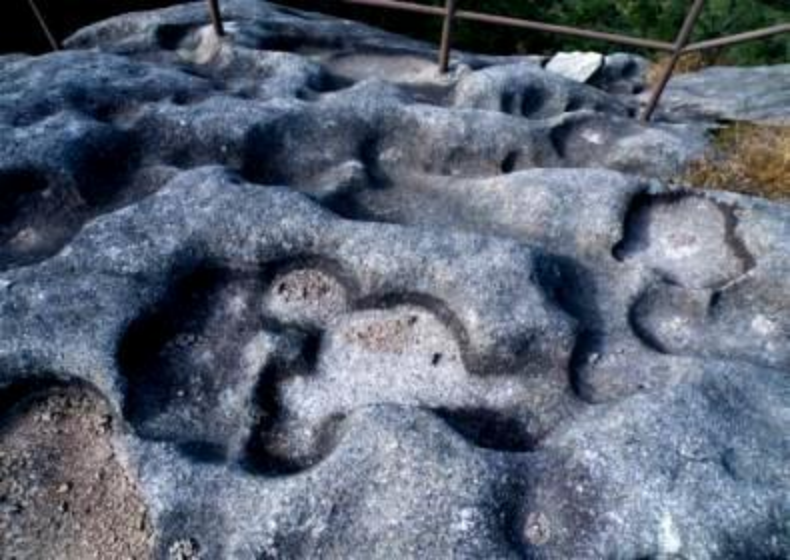
Weathering is the process of change, especially decomposition of rocks in physical or chemical ways due to exposure to the air. Factors contributing to weathering include solar radiation, water, air and organic activities. It can be classified into physical and chemical weathering. The former refers only to the breakdown of rocks and the latter to the change in chemical composition of rocks. Although different, these two weathering processes usually work together to decompose rock In addition, the biological weathering on rocks is also important. For example, the plant root can break rocks.Weathering can contribute to the formation of some of the spectacular landscapes, but can also damage the stone inscriptions and buildings.
3. Erosion Action
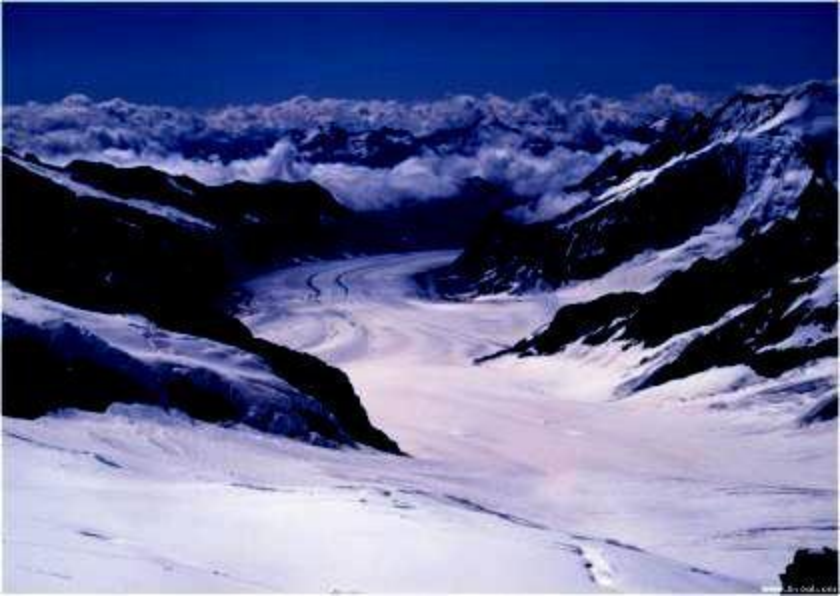
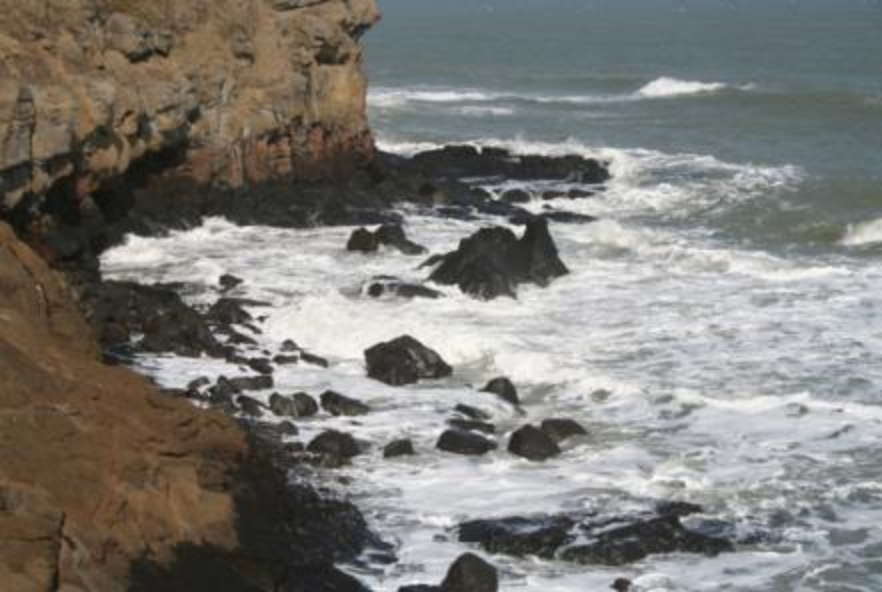
Erosion action refers to a changing progress of rock surface and its weathering product by external forces such as wind, flowing water, glacier, waves in moving state. Erosion action can be divided into mechanical and chemical erosion.
3.1 Water Erosion
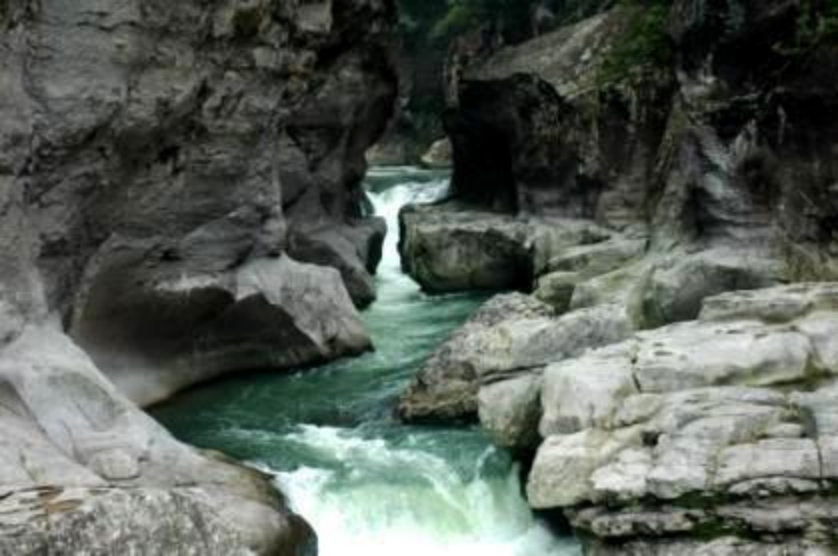
Water erosion action is the broken and saluted process of rock and soil by the action of flowing water (including rain). The running water on the slope washes the whole hill slope, to make it broken. The flowing water make the ravine and riverbed wider (lateral erosion), deeper (down-cutting effect) and longer (headward erosion). Almost all mountain and river valley we have seen result from the long period of fluvial erosion and cutting. With the increasing of river flow and its kinetic energy, or neotectonic uplifting, the erosion action of running water will be strengthened.
4. Geological Process of River
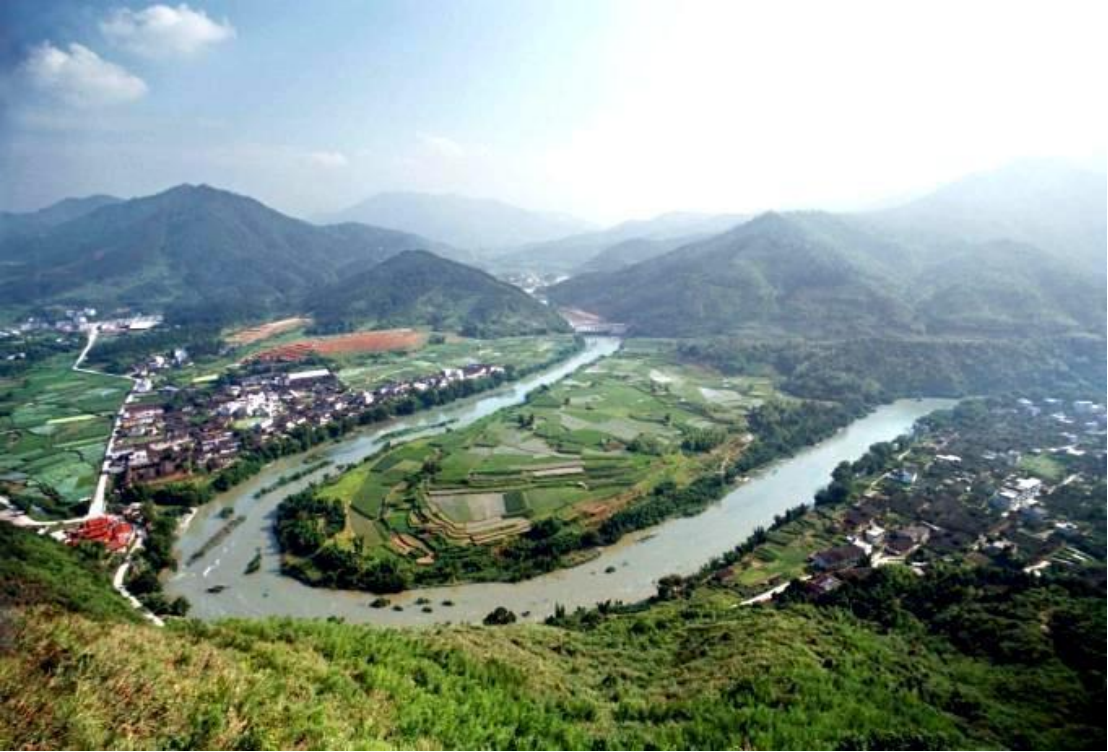
A river is a natural watercourse, always or periodically flowing towards lower lot along a linear trough (river bed), which might form by its own erosion. Geological process of river divided into: erosion, transportation and sedimentation..Water within a river is generally collected from precipitation through surface runoff, groundwater recharge in its reach. As erosion of running water, small rivers may become longer, deeper and wider, from ravine, rivulet, creek, brook or stream, changing to a big river.
4.1 Water Erosion
Water erosion is the process of washout or destroying of river bed by kinetic energy of river itself. According to the forms of erosion, river erosion could be divided into: hydraulic action, abrasion, detrition and dissolution. The hydraulic action of river is referred to the direct impact of running water upon rocks; the impact force is in direct proportion to the runoff and velocity of running water. The abrasion caused mainly by the load transported in running water, it is the friction between the load and river banks or river bed that makes river course wider and deeper. Detrition is referred to the loads transported in river collide and abrade each other, became smaller et rounded. Dissolution is a process that soluble minerals in rocks of river bank or riverbed are dissolved by running water, flowing away in form of solution. For a common sense, hydraulic action and abrasion are more important. The river erosion towards the source, riverbed and side banks three directions. Headwords erosion makes the river extends to upper reaches, down-cutting erosion make it deeper, lateral erosion makes it wider
4.2 Transportation
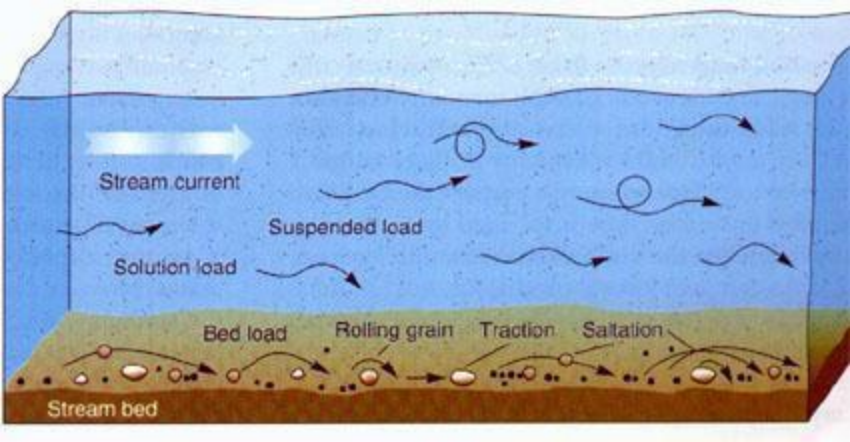
Transportation is the movement of substances who eroded from the riverbed or valley slopes by running water. The capacity of transportation is in direct proportion to the velocity of runoff and volume of running water. There are four models of transportation: (1) solvend in solution; (2) fine grains of clay or silt in suspension, sailing with the stream; (3) bigger fragment of rocks transported in saltation form, rolling up with flow occasionally; (4) Big stone and other heavy matter move only in rapid stream or flood. Most of transportation of river is the mechanical transportation of water insoluble, small part as chemical transportation of solute.
4.3 Sedimentation
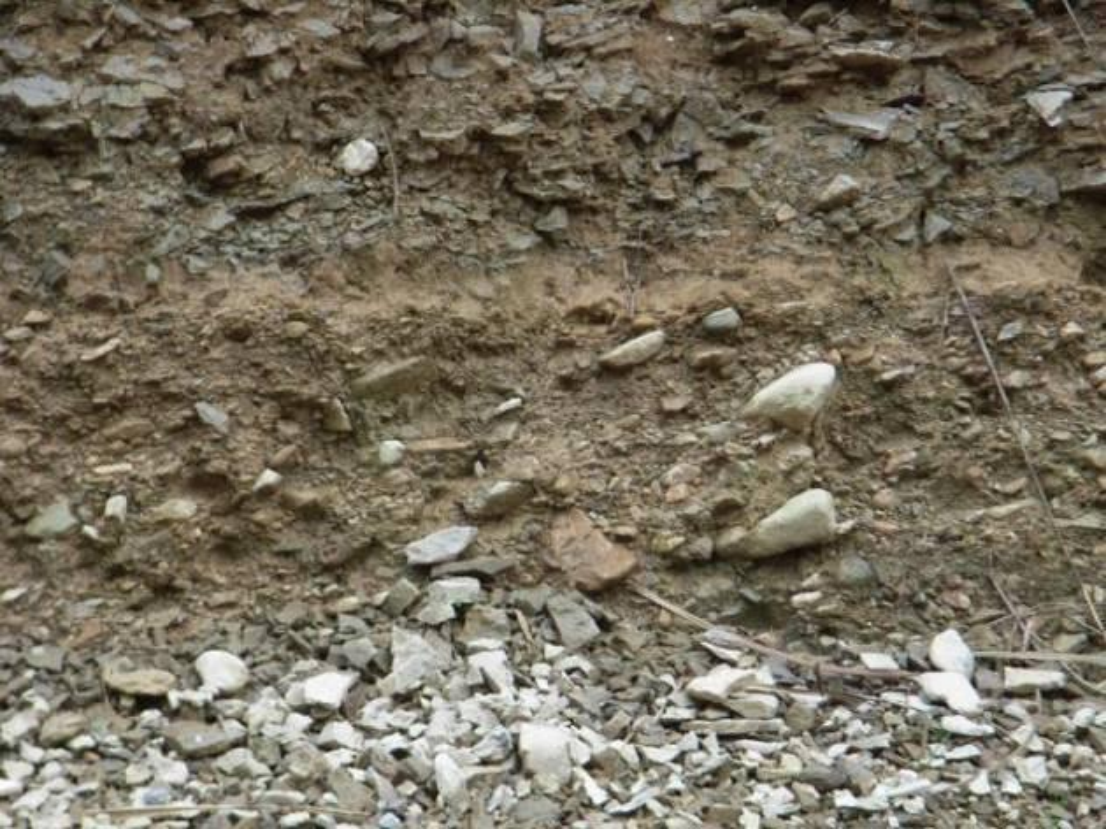
Sedimentation is the tendency for particles in suspension to settle out of the fluid in which they are entrained, and come to deposit as sediment. This process often happens in situations of river slope reducing, riverbed widening, runoff decreasing or turbidity increasing. The transportation of river brings about a sorting effect: particles to deposit in sequence of the size and weight, i.e. coarse and heavy earlier, fine and light later. If sedimentation rate is too fast, the sorting will be absent.
4.4 The Function of River
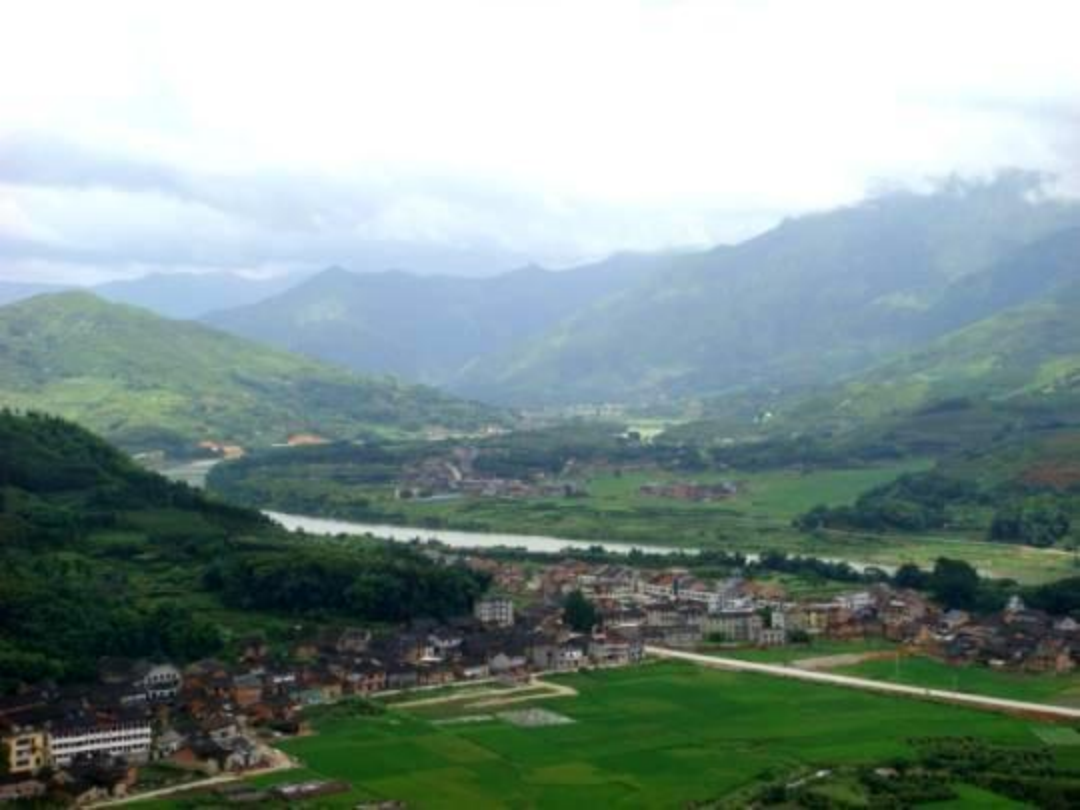
River is a precious and renewable natural resource. Although the total drainage area of river coversonly a tenth area of the earth, and river water is one ten-thousandth of total water resource of the earth, river is still the main water resource of human and living thing in some countries and areas. River is utilized in traffic navigation, water supply for agriculture and livestock, aquiculture and hydroelectric generation. It provides the leisure sites of visit, swimming, boating, camping, fishing and hunting. River and human civilization development are closely bound up in coordination with one another. Apart from human being, many wild living things (such as fish, shrimp, amphibian, aquatic insect and algae) live, ingest and multiplyin river. So that, river is an important protection for wild living things.
5. Mass Wasting
Mass wasting is the process by which the rock and regolith on the Earth's surface move downslope mainly due to the gravity force, such as landslide and collapse-induced rock fall. Mass wasting can be triggered by some factors like rainfall and earthquake. Rock usually fell along the planes of joints and fractures. Landslide and rock fall can form beautiful landscapes.However, they can also be geologic hazards, which may cause damages or loss of property and life.