Zhangjiajie UNESCO Global Geopark
编辑: 小编 时间:2023-07-04 17:14:51 浏览次数:
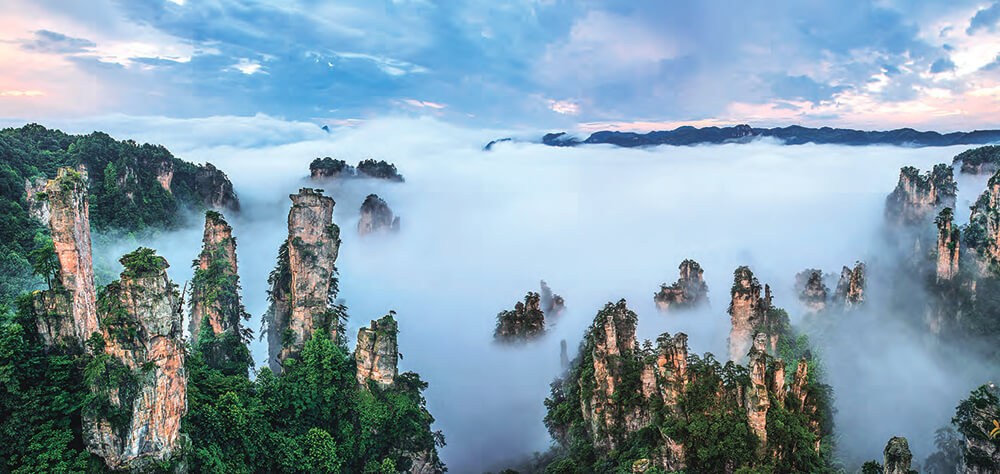
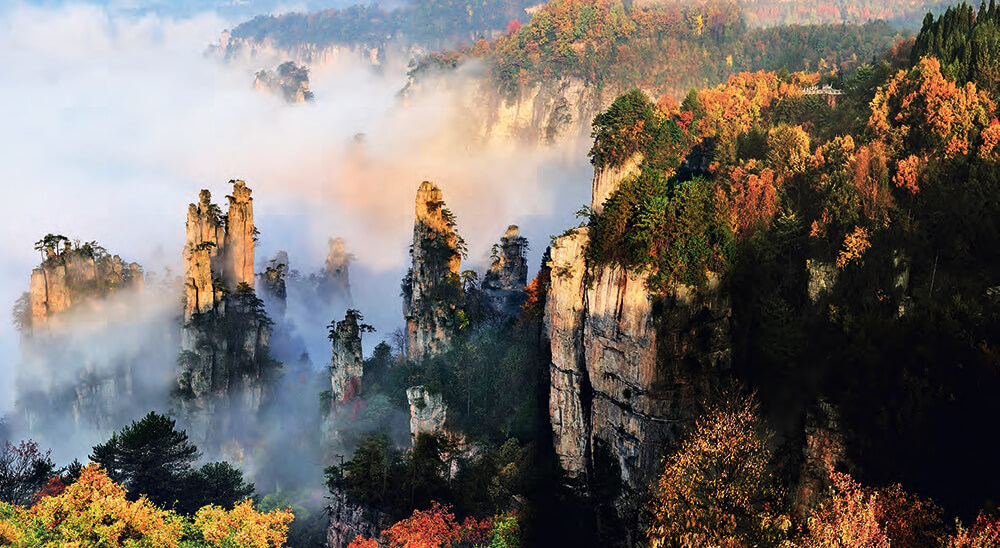
Zhangjiajie UNESCO Global Geopark is located in Wulingyuan National Scenic Spot District, Zhangjiajie City, Hunan Province, China, and in the hinterland of Wuling Mountains in the transition zone between the northeast of the Yunnan-Guizhou Plateau and the middle and low mountains in northwest Hunan. The park is mainly characterized by the rare Zhangjiajie quartz sandstone peak forest landform, supplemented by natural and cultural landscapes such as karst landforms, primitive forests, and Tujia customs. It is a large-scale natural park that integrates tourism, scientific exploration, and cultural experience. The park covers an area of 398 square kilometers and includes tourist areas such as Yuanjiajie, Yangjiajie, Tianzishan, Jinbianxi, Huangshizhai, Shili Gallery, Baofeng Lake, and Huanglong Cave.
Zhangjiajie UNESCO Global Geopark is located in Wulingyuan National Scenic Spot District, Zhangjiajie City, Hunan Province, China, and in the hinterland of Wuling Mountains in the transition zone between the northeast of the Yunnan-Guizhou Plateau and the middle and low mountains in northwest Hunan. The park is mainly characterized by the rare Zhangjiajie quartz sandstone peak forest landform, supplemented by natural and cultural landscapes such as karst landforms, primitive forests, and Tujia customs. It is a large-scale natural park that integrates tourism, scientific exploration, and cultural experience. The park covers an area of 398 square kilometers and includes tourist areas such as Yuanjiajie, Yangjiajie, Tianzishan, Jinbianxi, Huangshizhai, Shili Gallery, Baofeng Lake, and Huanglong Cave.
The park is lined with three thousand unique peaks, arranged in a staggered and varied manner, and is a typical representative of the global quartz sandstone peak forest landform. It has been named "Zhangjiajie Landform" by the International Association of Geologists. The platform, Fangshan, Fengqiang, Fenglin, and residual forests are scattered throughout the landscape, clearly and completely witnessing the entire process of the development and evolution of Zhangjiajie's landforms. It is a standard example for the study of the genesis and evolution mechanism of sandstone landforms worldwide, and a natural history book for studying regional crustal movements, lithofacies paleogeography, and environmental changes. The karst landscape of the park complements the sandstone peak forest, with Huanglong Cave's "three story" karst cave being the most typical. The cave has a rich variety of landscape types and beautiful shapes, which are rare in the world and can be called the "Zhangjiajie Cave".
The park belongs to the subtropical mountain prototype monsoon humid climate, with 2018 species of vascular plants and 368 species of terrestrial vertebrates recorded, including 40 species of nationally protected wild plants and 46 species of nationally protected wild animals. It has rich biodiversity and is an ideal paradise for wildlife.
The park is a gathering place for ethnic minorities, mainly the Tujia ethnic group, with rich and unique ethnic customs, long-standing traditional customs, and a rich and charming Tujia culture. The Tujia mountain villages, stilted buildings, as well as dramas and dances such as Maogusi, hand waving dance, and ladder horse jumping, are all charming and constitute unique ethnic cultural landscape resources.